

Training on ‘Forensic assessment of predation events attributed to the wolf’
On 12 December 2025 took place the ‘Forensic assessment of predation events attributed to the wolf’ training course, held as part of the LIFE LUPILYNX project and in collaboration with LIFE Wild Wolf (https://www.lifewildwolf.com), ICNF, I.P. and the Histology and Pathology Laboratory of the University of Trás-os-Montes and Alto Douro. The course was designed for nature rangers and technicians from the Institute for Nature Conservation and Forests and it was also open for professors, students and partners.
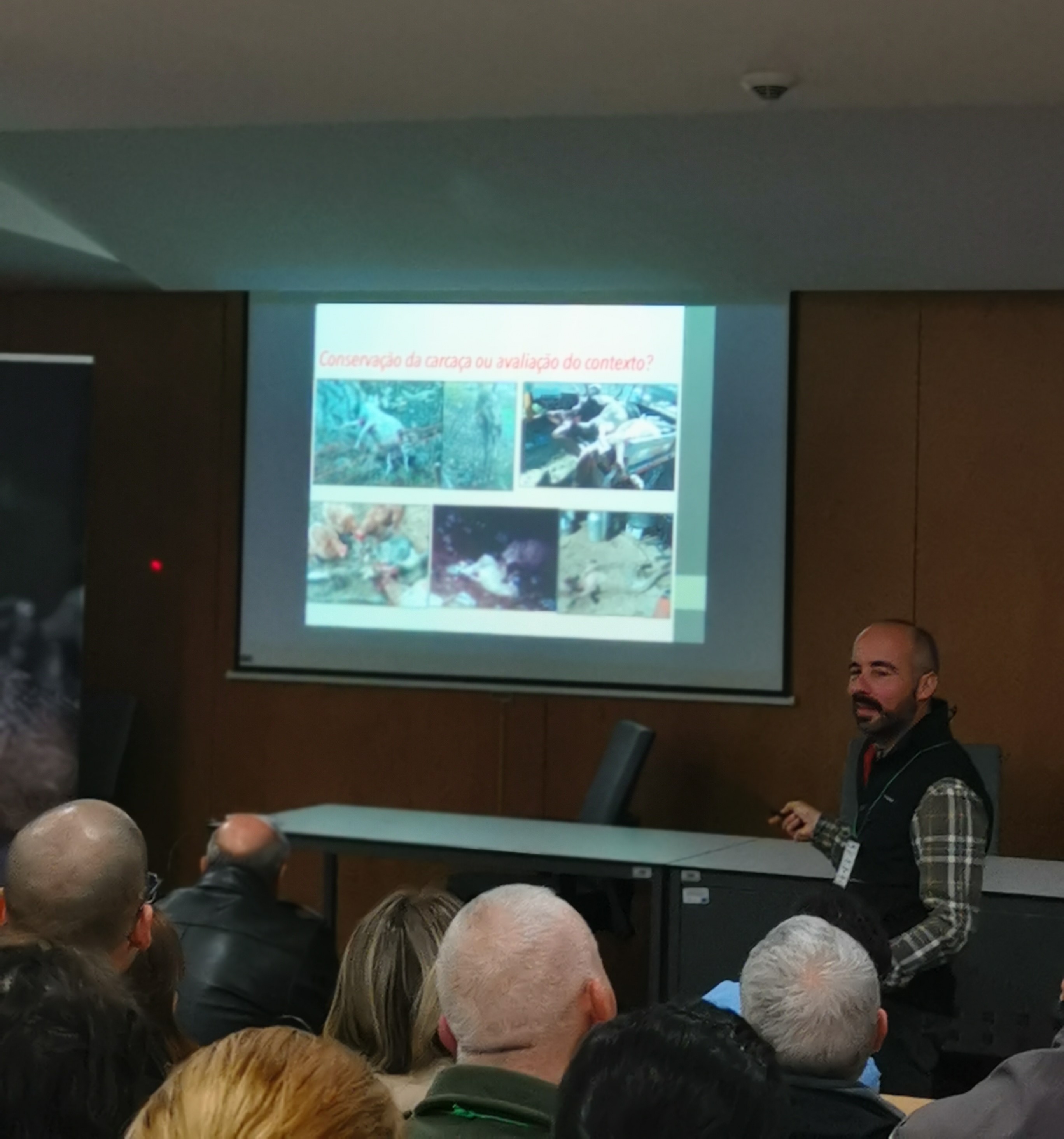
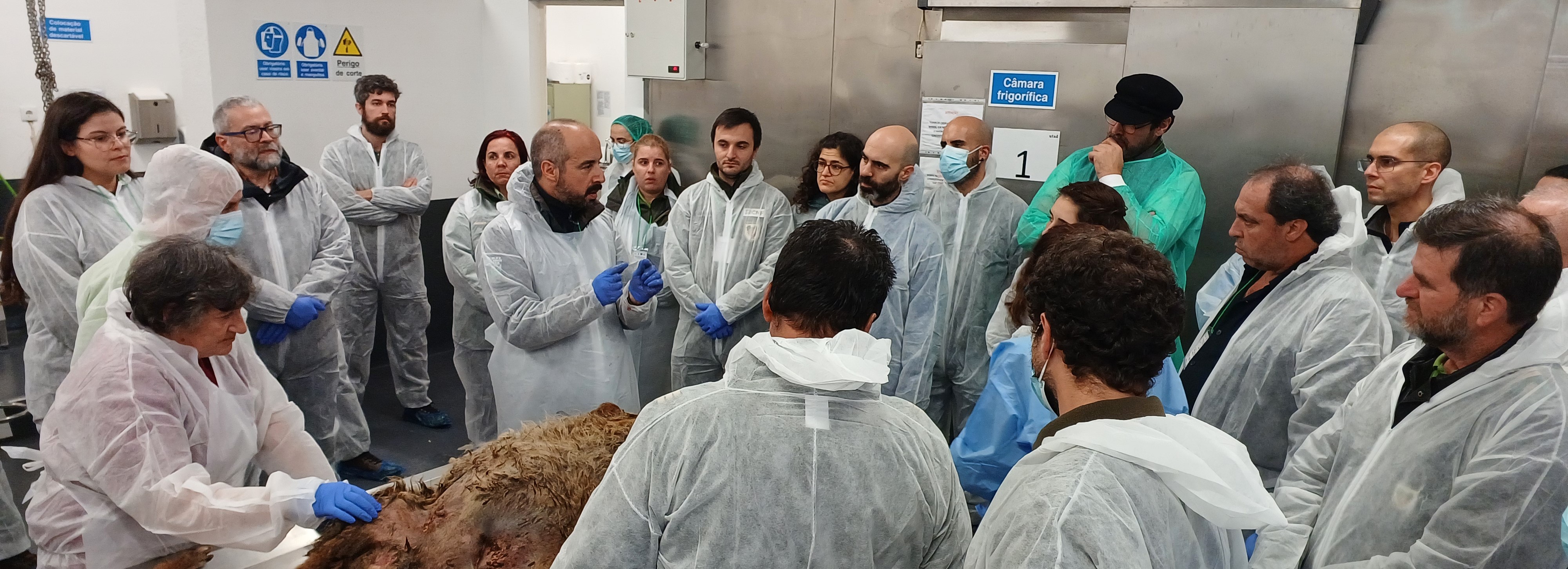
The training was conducted by veterinarian Simone Angelucci, from the Maiella National Park (Italy), who shared his knowledge of forensic evaluation in cases of death of livestock (flock or herd) during the morning session; and in the afternoon the participants had the opportunity to consolidate their knowledge in a practical session in the necropsy room of UTAD's Veterinary Hospital, through the forensic evaluation of two sheep corpses whose death was believed to have been attributed to a wolf.
In a very interactive way, Simone Angelucci began the session with a brief introduction to the work carried out over two decades by the Maiella National Park team, which has gradually evolved from pure monitoring of the wolf and its prey (biology, behaviour and ecology) to actions on the ground aimed at managing their coexistence with human populations and socio-economic activities. He emphasised the importance of having protocols for collecting evidence in the field, analysing the data and ensuring that the context is properly assessed, as well as the impact of speeding up administrative procedures.
The relevance of developing in-depth knowledge about the predatory behaviour of carnivores was also discussed, whether wild, such as wolves or lynx, or domestic animals whose behaviour can sometimes become ferocious and cause damage to livestock. With the use of photographs and infographics, the discussion then focused on the challenge of being able to unequivocally identify an event of predation by a wolf (or other wild species), the sensitivity of the subject and the importance of the assessment and attitude of those who first interact with a farmer who has lost an animal in circumstances that need to be diagnosed. Still in the morning, there was a brief presentation by Rewilding Portugal on the protocol for taking non-invasive samples to identify the predator in cases of damage assessment, which is in force in LIFE LUPILYNX's working areas.
During the afternoon session, participants had the opportunity to observe in a practical way the concepts and recommendations covered in the theoretical part of the training. Through the analysis of two sheep carcasses obtained from a real case of reported damage, the trainer demonstrated how an assessment should be conducted from the point of view of a nature ranger or technician. Examples were given of the procedure that should be followed on arrival at the inspection site and the main evidences that should be assessed and recorded. The importance of following the procedure and recording as much information as possible about the attack and its context were highlighted, with the aim of making the most objective assessment as possible.
This training event is part of a comprehensive programme of technical training and capacity-building being implemented by LIFE LUPILYNX. Events such as this aim to broaden and deepen the knowledge of all those who share the territory with wild species, and whose objective is to improve the capacity to have fair and adequate technical-legal measures for the coexistence of human activities with wildlife.
Photo Credits: ICNF

